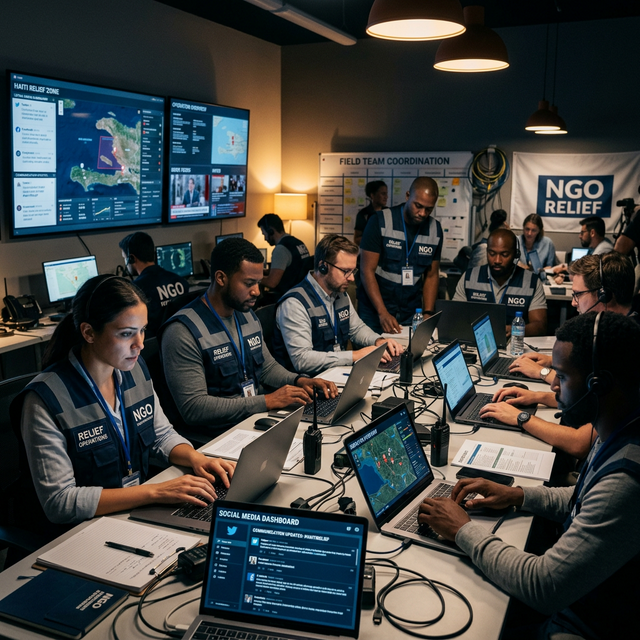
Effective Crisis Communication and Social Media Management for NGOs
When a crisis strikes—whether it is a natural disaster requiring immediate ongoing relief, an organizational challenge, or geopolitical turmoil—Non-Governmental Organizations (NGOs) are frequently on the frontlines. During these times, people look to NGOs not only for aid but also for reliable information, leadership, and emotional support.
Effective crisis communication on social media is vital to maintaining public trust, mobilizing urgent resources, and preventing misinformation. Below are the key strategies for managing NGO communications during high-stakes moments.
1. Establish a Crisis Communication Protocol in Advance
The worst time to figure out your crisis strategy is when a crisis is actively occurring. Every NGO must have a documented communication protocol.
- Designate a Crisis Team: Identify exactly who is authorized to speak on behalf of the organization, who monitors social media, and who coordinates with field teams.
- Draft Holding Statements: Prepare generalized, pre-approved statements that emphasize your organization is aware of the situation and gathering facts. This buys you time while satisfying the public’s immediate need for a response.
2. Prioritize Speed, Accuracy, and Transparency
In a crisis, rumors spread faster than the truth. It is essential to be a rapid, reliable source of information.
- Accuracy Over Speed: While speed is important, accuracy is paramount. A rushed, incorrect statement can permanently damage an NGO’s credibility. If you don't know something, be transparent and state that you are actively investigating.
- Centralize the Message: Ensure all channels (website, Twitter/X, Instagram, press releases) are projecting the same unified message to avoid confusion.
3. Adapt Your Tone to Match the Gravity of the Situation
During a crisis, typical marketing campaigns and lighthearted posts must be paused immediately. Continuing to post "business as usual" content while a tragedy unfolds makes an organization appear out of touch.
- Show Empathy and Action: Focus messaging on human empathy and the concrete steps your organization is taking to help.
- Pause Automation: Review all scheduled social media posts and emails. Cancel anything that could be deemed insensitive or irrelevant.
4. Tackle Misinformation Head-On
Because NGOs often deal with sensitive topics and high-stress environments, they are frequent targets of misinformation.
- Monitor Actively: Use social listening tools to track mentions of your NGO and the crisis at large.
- Correct the Record Respectfully: Do not engage in hostile arguments. Respond with clear, verifiable facts, links to official statements, and visual evidence (e.g., photos of your ongoing field operations) to dispel rumors quickly.
5. Provide Clear Call-to-Actions (CTAs) for Supporters
During a crisis, people genuinely want to help but often feel helpless. Channel their anxiety into productive action.
- Direct Support: Provide short, easily identifiable links for emergency donations.
- Non-Monetary Help: If managing physical donations/volunteers in a disaster zone is difficult, explicitly state what is NOT needed right now. Alternatively, ask supporters to simply share official updates to combat misinformation.
Post-Crisis: Follow Up and Rebuild
Once the immediate danger has passed, your communication shouldn't stop. Follow up with donors to show exactly how their emergency funds were utilized. Sharing the "aftermath" and rebuilding processes fosters long-term loyalty and proves your organization’s enduring commitment.
Is your NGO prepared for a digital crisis? Echo Lab provides expert digital consulting and social media management for NGOs. Reach out to our team to build a resilient communication infrastructure.